Chinese


Placer Gold Recovery: How to Choose the Right Equipment for River Sand Deposits
Placer Gold Recovery: How to Choose the Right Equipment for River Sand Deposits
Industry Insight – In placer mining, gold rarely appears in convenient nuggets. More often, it hides in river sand, locked inside clay clumps, or mixed with gravel and heavy minerals. Extracting that gold efficiently depends less on a single “magic machine” and more on selecting the right combination of screening, gravity concentration, and upgrading equipment—tailored to the ore’s physical characteristics.
With artisanal and small-scale mining (ASM) operations expanding across Africa, Southeast Asia, and South America, understanding these equipment choices has become essential for both productivity and compliance.
Step 1: Screening and Washing – Removing the Waste Early
Before any gold recovery begins, oversized waste must be removed. The choice of screening equipment depends almost entirely on clay content.
• Vibrating Screens: Ideal for clean placer deposits where clay is minimal. These screens deliver high throughput and simple operation, quickly separating oversized cobbles and barren rock from pay dirt.
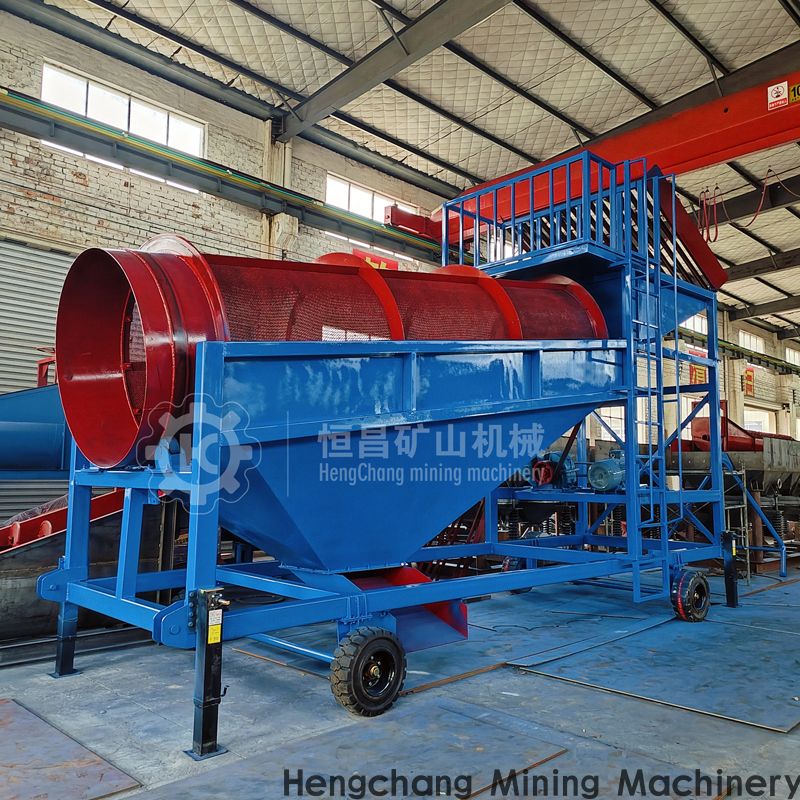
• Trommel Screens (Rotary Screens): Better suited to deposits with moderate clay content. While slower than vibrating screens, trommels handle sticky material more effectively and reduce blinding.
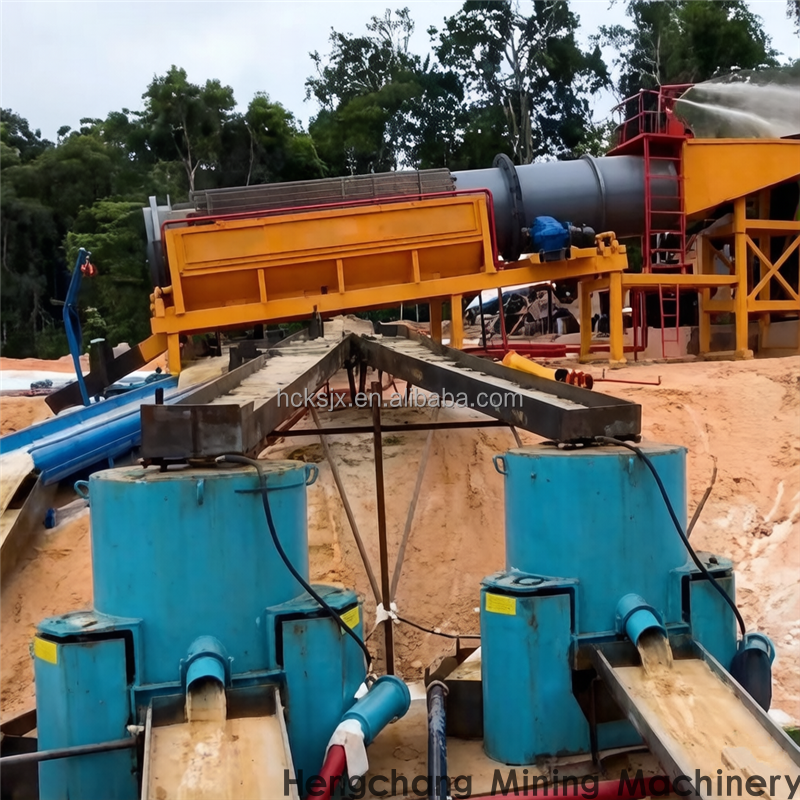
• Scrubber Trommels (Cylindrical Washers): Essential for high-clay ores where gold is encapsulated in mud balls. These machines combine aggressive scrubbing with screening, breaking down clay matrices and liberating fine gold before concentration.
Industry experience shows that poor washing is the leading cause of downstream gold losses—especially in laterite-rich or tropical placer deposits.
Step 2: Primary Gravity Concentration – Capturing the Gold
Once screened, the fine sand fraction typically contains trace amounts of gold—often just grams per tonne. Efficient, low-energy gravity separators are required.
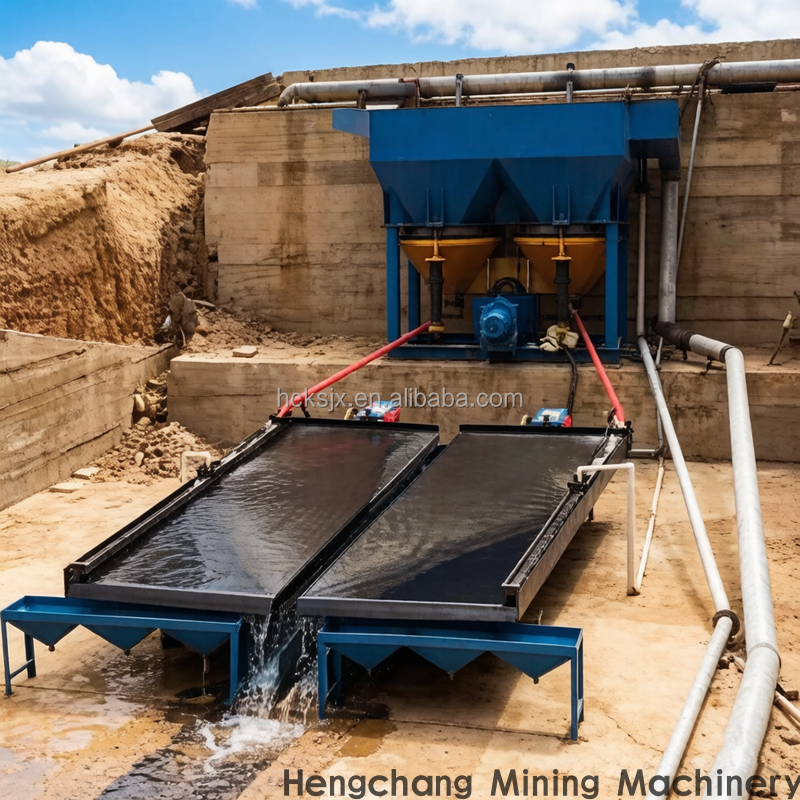
• Jigs: Preferred when gold grades are relatively high and recovery rates must be maximized. Modern jigs offer strong penetration through coarse sands and good recovery of fine gold when properly tuned.
• Sluice Boxes & Gold Carpets: Best for low-grade deposits requiring high throughput. While recovery rates are lower than jigs, sluices excel at handling large volumes with minimal operating cost.
• Centrifugal Concentrators: Increasingly common in modern plants, offering excellent recovery of fine and ultra-fine gold.
• Spiral Chutes: Often used in beach sands or large-volume alluvial operations where water supply is adequate.
In many operations, jigs and sluices serve as the primary workhorses, producing a “coarse concentrate” that still requires further upgrading.
Step 3: Final Upgrading – Producing Smelt-Ready Concentrate
The coarse concentrate from jigs or sluices typically runs 1–10% gold by weight—far from pure. Final upgrading bridges the gap between mine site and refinery.
• Shaking Tables (e.g., 6-S Tables): Deliver very high enrichment ratios, separating gold from heavy minerals such as magnetite, ilmenite, and garnet. Tables are continuous-feed devices with straightforward operation, though absolute gold recovery is slightly lower compared to batch systems.
• Amalgamation Barrels (Mercury Drums): Still encountered in some regions, these batch-process units achieve high recovery rates but raise serious environmental and health concerns. Many jurisdictions now discourage or prohibit mercury-based methods.
• Gemini / Laboratory Tables: Increasingly used for final polishing of small volumes, especially in exploration and boutique placer operations.
In practice, most modern plants pair a centrifugal concentrator or jig for bulk capture with a shaking table for final cleaning—balancing recovery, grade, and operating cost.
Putting It All Together
A typical efficient placer gold circuit looks like this:
1. Scrubber Trommel → wash and screen out oversize waste.
2. Jig or Sluice Box → recover the majority of liberated gold.
3. Shaking Table → upgrade coarse concentrate to smelt-grade purity.
This modular approach allows operators to scale capacity, adapt to changing clay content, and meet tightening environmental standards—all while keeping capital and operating costs under control.
Industry Outlook: As mercury phase-outs accelerate globally, gravity-only circuits built around scrubbers, jigs, and shaking tables are becoming the de facto standard for responsible placer gold recovery. The winners will be operators who match equipment to ore—rather than forcing one machine to do every job.