Chinese


JXSC South Africa Semi-Automatic Centrifuge 20TPH Gold Recovery Plant Case
If you've been in the gold mining game for a while, you know that the bottleneck is often gold recovery – not just digging up ore, but actually getting the fine gold out.
Let me walk you through a real-world case that changed how a South African operation runs. And trust me, it's a common story for many African miners.
The Problem: Lost Fine Gold in South Africa
A small-to-medium scale gold operation in Mpumalanga, South Africa, was running a standard gravity separation circuit. But they were seeing a big problem: their sluice boxes were losing a lot of ultra-fine gold (-1mm). The finer gold just washed right past them into the tailings ponds.
The biggest issue? Their existing equipment couldn't handle a continuous feed with high capacity. They were looking at a target of 20 tons per hour (TPH) throughput, and needed a higher-gravity solution.
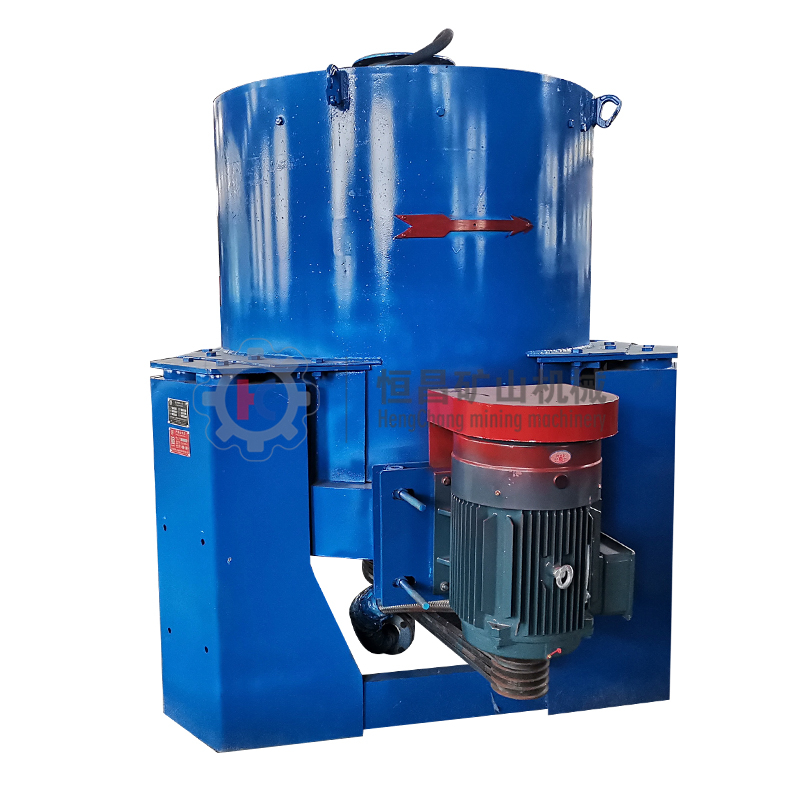
The Solution: JXSC South Africa Semi-Automatic Centrifuge 20TPH Gold Recovery Plant
Enter the JXSC Semi-Automatic Centrifuge. This isn't a toy. It's a heavy-duty, high-G-force concentrator built for tough African conditions.
Basic Specs:
Model: JXSC Semi-Automatic Centrifuge (20TPH version)Max Feed Size: <6mm (after crushing and grinding)
Capacity: 15-20 tons per hour (dust and dry ore equivalent)
Recovery Rate: Over 90% for free gold >0.074mm (200 mesh)
Power: 7.5-11 kW (depending on voltage)
Weight: ~1.2 tons
How Does This Centrifuge Actually Work?
It's simpler than you might think.
Step 1: The ore slurry (mixed with water) is fed into a high-speed rotating cone.
Step 2: The cone spins at 600-800 RPM, generating centrifugal force up to 100 G-force.
Step 3: Heavier particles – gold, black sand, magnetite – get flung to the outer wall and trapped in special grooves called "riffles." Lighter waste rock and sand get washed out the top.
Step 4: After a few minutes of running, the machine automatically stops and flushes the heavy concentrate out. The operator just needs to press a button.
The semi-automatic part means: the machine runs continuously (feeds automatically), but the concentrate discharge is operator-controlled. You don't need a technician to monitor it 24/7 – just a guy to push a button every 10-15 minutes.
What Ore Types Can This Machine Handle?
The JXSC centrifuge is a gravity separator, so it works best on:
Alluvial gold (placer gold, river gold)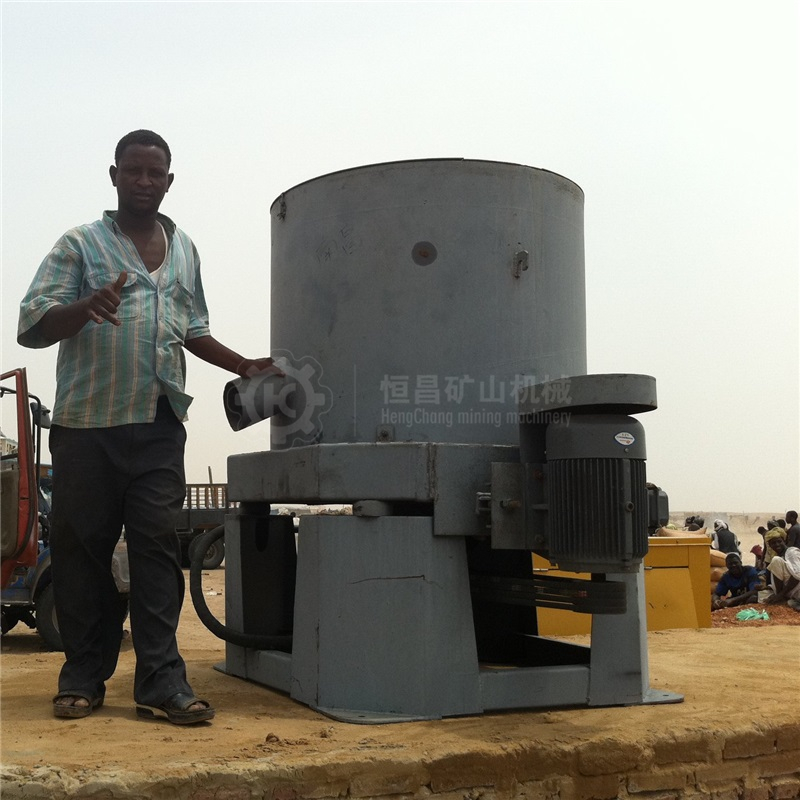
Tailings re-processing (recovering lost gold from old dumps)
Platinum group metals (PGM)
Cassiterite (tin ore)
Tungsten ore
Coltan ore
Magnetite and hematite (iron ore pre-concentration)
For the South African case, it was processing a hard rock gold ore with quartz veins. The gold was liberated after primary crushing and ball mill grind to 80% passing 1mm.
What Makes This Centrifuge Stand Out?
I've seen three key advantages that make this unit a winner for African miners:
1. High Recovery of Fine Gold
Unlike jigs or sluice boxes, the JXSC centrifuge catches gold particles as small as 0.074mm. In the South African case, they saw recovery jump from 65% to 92% on the -0.5mm+0.074mm fraction.
2. Simple Operation
You don't need a PhD in metallurgy. One local operator who had never touched a centrifuge before was making concentrate after 30 minutes of training. The control panel is straightforward – start, stop, and flush.
3. Low Water Consumption
While a traditional jig uses 2-3 m³ of water per ton, this centrifuge uses only 0.5-1 m³ per ton. In water-scarce areas of Africa (like parts of South Africa, Namibia, Botswana), that's a game-changer.
Performance Parameters (20TPH Model)
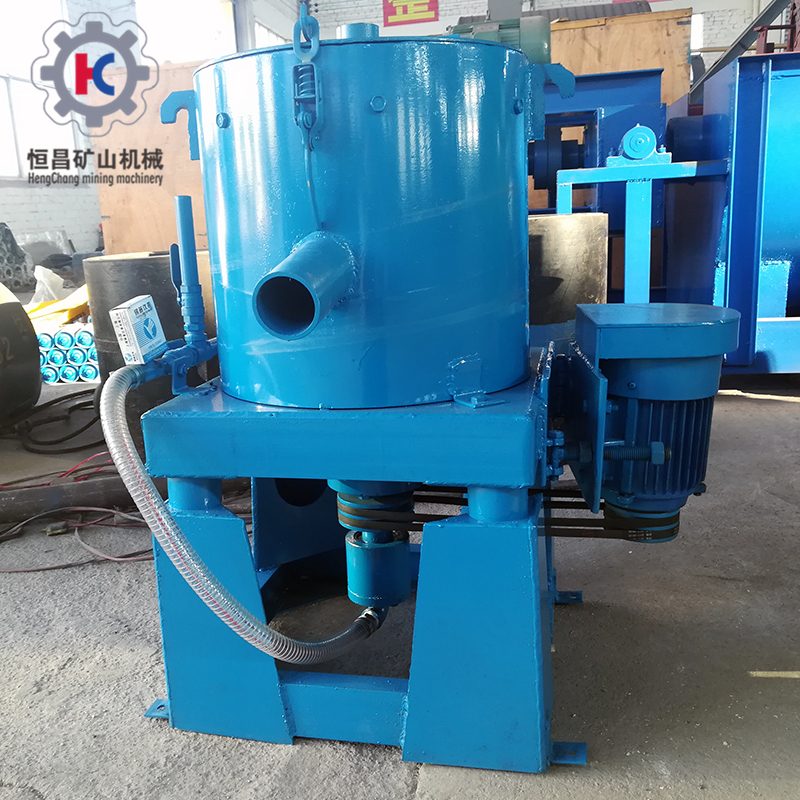
| Parameter | Value |
|---|---|
| Feed Capacity | 15-20 TPH (dry ore) |
| Feed Size | 0-6mm (optimum 0-2mm) |
| Recovery Rate (free gold) | 90-95% |
| Concentrate yield | 3-8% of feed |
| Power Consumption | 7.5-11 kW |
| Water Consumption | 0.5-1 m³/T |
| Weight | ~1,200 kg |
| Length x Width x Height | 2.5m x 1.8m x 2.2m |
Daily Operation and Maintenance – The Practical Stuff
Here's what the operator actually does every day:
Before start-up:
Check oil level in gearbox (SAE 80W-90 gear oil)Inspect rubber liners for wear
Check bolts on the rotating cone
Ensure water supply is on (you need pressure, not just flow)
During operation:
Feed must be consistent (no big surges)Monitor the concentrate discharge button – press when the machine signals (usually a buzzer or light)
Check the tailings (waste) – if you see shiny gold, your feed size is too coarse or the G-force is too low
After shutdown:
Run a clean water flush for 3-5 minutesOpen the concentrate chamber and clean out any packed material
Grease the bearings (every 50 hours)
Check the riffles for damage (replace if worn down >50%)
Common problem: "The machine stops spinning too fast" – usually means the feed slurry is too thick (add more water) or the concentrate chamber is full (discharge immediately).
Comparison: Centrifuge vs. Other Gold Recovery Equipment
| Equipment | Recovery of Fine Gold | Maintenance | Water Use | Cost |
|---|---|---|---|---|
| JXSC Centrifuge | Excellent (85-95%) | Moderate | Low-Moderate | Moderate |
| Jig (Pan American style) | Good (70-85%) | High (rubber parts wear) | High | Low |
| Sluice Box | Poor (40-60% for fines) | Low | Very High | Very Low |
| Shaking Table | Excellent (90-95%) | Low (but slower) | Low | Moderate |
| Knelson Concentrator | Excellent (95%+) | High (expensive parts) | Moderate | Very High |
Bottom line: For the 20TPH capacity in South Africa, the centrifuge hit the sweet spot – it's cheaper than a Knelson, but much better than a jig for fine gold. The semi-automatic feature means you don't need a full-time operator.
Real-World Results from South Africa
After installing the JXSC Semi-Automatic Centrifuge at the South African mine:
Gold recovery jumped from 65% to 91%Tailings grade dropped from 0.8g/T to 0.07g/T
Daily gold production increased by 40% (with the same crushing capacity)
Payback period: 4 months (due to the gold they recovered that was previously lost)
The operator told me: "We were leaving money in the creek. Now we catch it."
Key Takeaways for African Miners
If you're operating in South Africa, Zimbabwe, Ghana, Mali, Tanzania, or any gold-producing country in Africa, here's what you need to remember:
Use the right tool for the job. Sluice boxes work for nuggets. For fine gold (<1mm), you need a high-G centrifuge.
Feed size matters. Crush your ore to <6mm (better at <2mm) to maximize recovery. Don't expect miracles with coarse feed.
Water is precious. This machine uses half the water of a jig. In dry regions, that's a serious advantage.
Maintenance isn't scary. If you can change oil in a car, you can maintain this centrifuge. The key is daily checks.
Semi-automatic is the sweet spot. Fully automatic centrifuges are expensive and complex. Fully manual ones waste operator time. Semi-automatic gives you the best of both worlds.
Conclusion: Is the JXSC Centrifuge Right for Your Mine?
If you're trying to recover gold from:
Alluvial/placer deposits at 15-20 TPHHard rock gold ore (after crushing)
Tailings (re-processing old waste)
And you want high recovery without breaking the bank on a full-automatic system – then yes, the JXSC Semi-Automatic Centrifuge 20TPH is a solid choice.
The South African case proved it works in real conditions. And frankly, when your gold recovery jumps from 65% to 91%, that's money in the bank.
The key is to match your equipment selection (选机设备工艺) to your specific ore characteristics. Don't just buy a machine – buy a solution. And for fine gold at 20 TPH, this centrifuge is a solution that has already been proven.
Need more technical details or a custom quote for your mine site? Contact JXSC Mine Machinery for specific recommendations based on your ore test results.