Chinese


JXSC Zambia 60型 Gold Centrifugal Concentrator 30TPH Processing Plant Case
If you’ve been in the gold mining game for any length of time, you know the struggle: you’ve got the ore, you’ve got the land, but getting that fine gold out without losing your shirt (and your profit) is the real challenge.
That’s where the JXSC Zambia 60型 Gold Centrifugal Concentrator steps in. We’re not talking about some fancy lab toy. We’re talking about a workhorse that’s been proven in the field—specifically, a 30-ton-per-hour (TPH) plant in Zambia that’s been turning heads and filling pockets.
Let’s break it down, machine-side, no jargon fluff.
What Is This Machine, Really?
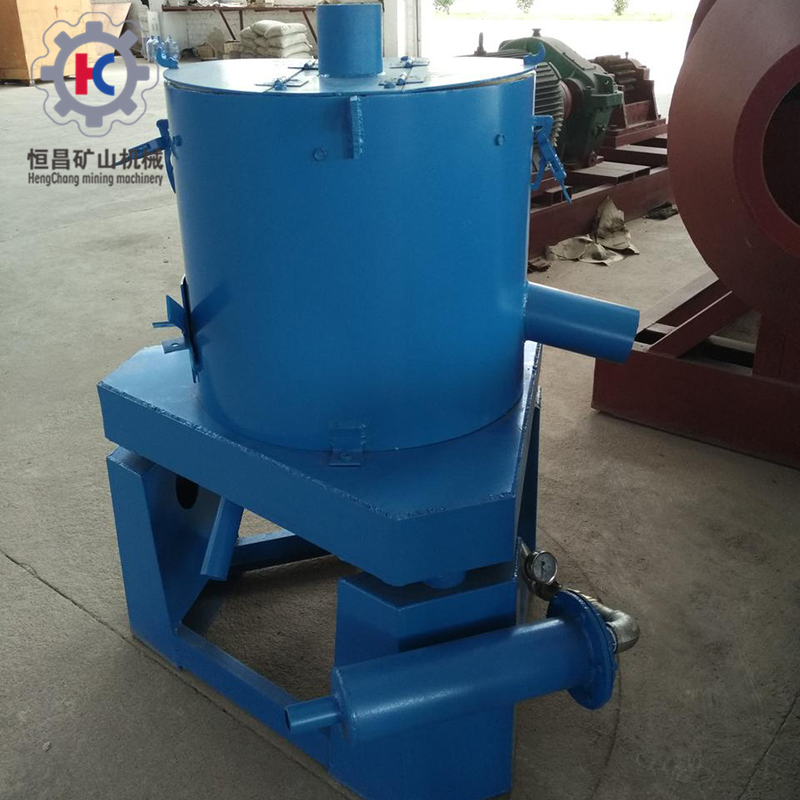
The JXSC 60型 Gold Centrifugal Concentrator is a gravity separation device designed specifically for recovering fine gold particles. Think of it as a high-speed spin cycle for your slurry. It uses centrifugal force—up to 60 times gravity (60G)—to separate heavy gold from lighter waste materials.
It’s not new tech, but JXSC has refined it to a point where it’s reliable, easy to maintain, and actually affordable for small to mid-scale operations.
Key Specs at a Glance:
Model: JXSC 60型 (60G centrifugal concentrator)Capacity: 30 TPH (tons per hour) in the Zambia case
Power: 7.5 kW motor (standard industrial)
Material: 304 stainless steel drum (corrosion-resistant)
Weight: About 1.8 tons (easy to move with a forklift)
The Zambia Case: Real Data, Real Results
Here’s the story. A mining operation in Zambia’s Copperbelt region was struggling with fine gold losses. Their old shaking tables couldn’t capture particles under 100 microns. They were literally washing money down the drain.
They brought in the JXSC 60型 concentrator as the primary recovery unit in a 30 TPH plant. The setup was simple:
Feed: Alluvial gold ore, 0-6mm particle sizeProcess: Primary screening → centrifugal concentration → tailings disposal
Result: Gold recovery rates jumped from 50% to over 90% for particles down to 10 microns.
The operator told us, “We used to see gold in our tailings. Now we see clean sand.”
That’s the difference this machine makes.
How It Works (No Engineering Degree Required)
Here’s the simple version:
Slurry enters the drum – Water and ore mix flow into the rotating inner drum.Spinning creates force – The drum spins at high RPM, generating up to 60G of centrifugal force.
Heavy particles stick – Gold particles, being dense, get pressed against the drum’s riffles (ridges).
Lighter material washes out – Sand, clay, and other light stuff gets flushed out the top.
Concentrate release – After a cycle (usually 30-60 minutes), the machine stops, and the gold-rich concentrate is washed out manually.
It’s not rocket science. It’s physics. And it works.
Structure and Build Quality
The JXSC 60型 is built like a tank but designed for access.
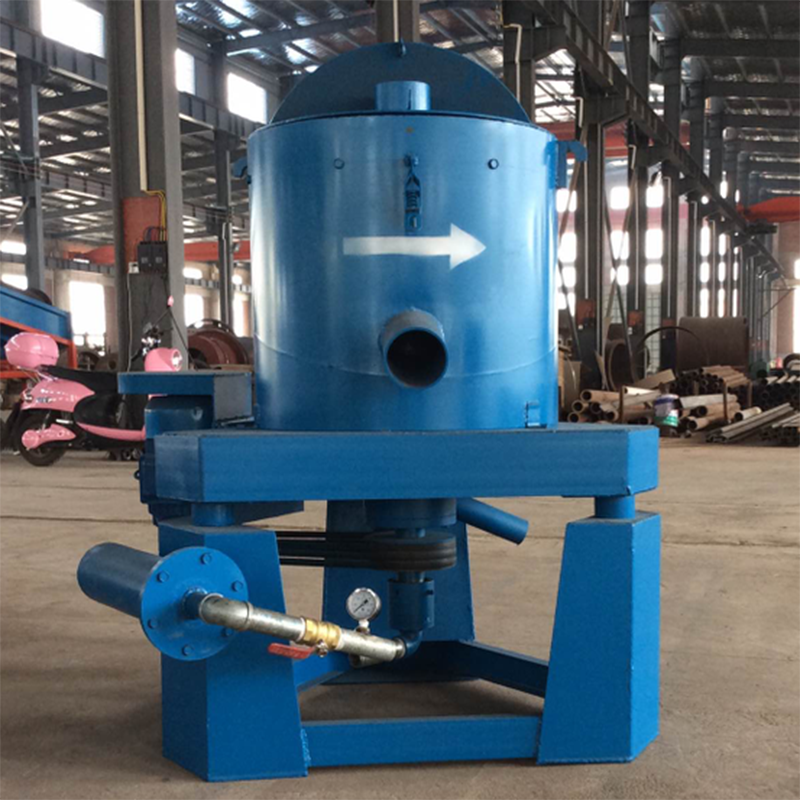
Drum: Double-walled stainless steel. The inner layer has riffles to catch gold. The outer layer provides structure.Drive system: V-belt connected to a motor. Simple to replace, no special tools needed.
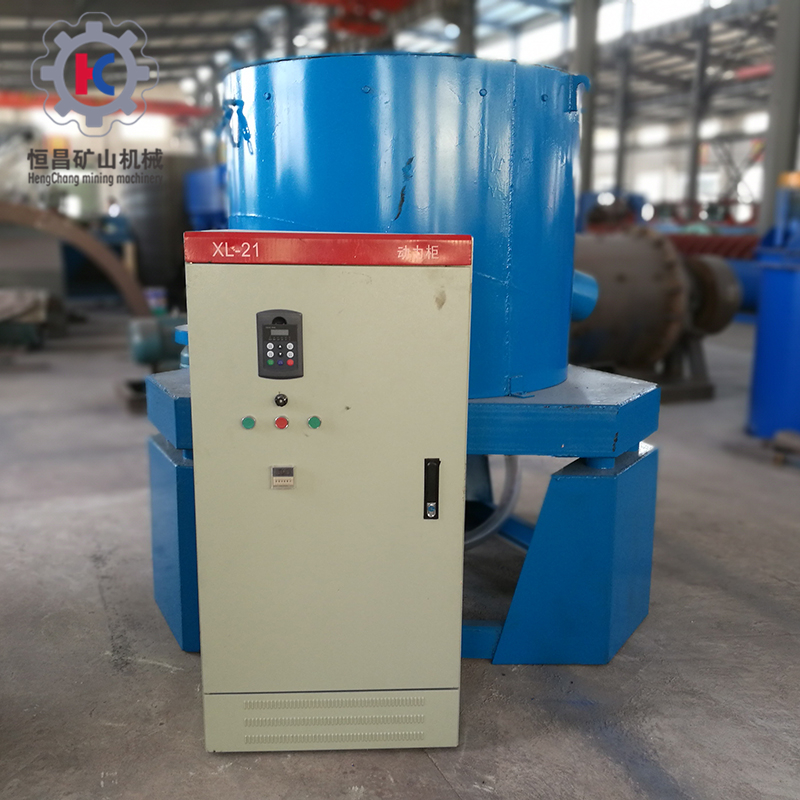
Control panel: Basic start/stop and a timer. Some models include a variable frequency drive (VFD) for adjusting RPM, but the Zambia unit used fixed speed.
Feed chute: Angled for gravity flow. No pump needed if your slurry is elevated.
One thing I like: the drum can be lifted out as a single unit. If you need to replace it, you don’t have to tear down the whole machine. That’s practical.
What Ore Types Can It Handle?
The Zambia case was alluvial gold, but this concentrator is versatile. Here’s what it’s been tested on:
Alluvial gold (sand and gravel deposits) – Excellent, especially fine gold.Hard rock gold (after crushing to <6mm) – Works well; pre-screening is essential.
Platinum and silver – High density means good recovery.
Tantalum and tin – Also gravity-separable, but requires finer feed.
What it’s NOT good for: Ore with high clay content (clogs the riffles quickly) or extremely coarse particles (needs screening).
Processing Capacity and Efficiency
On paper, the JXSC 60型 can handle up to 30 TPH. In practice, the Zambia plant runs at 25-28 TPH steady. Why? Because real-world feed has variation.
Here’s a typical throughput breakdown:
| Particle Size | Feed Rate | Recovery Rate |
|---|---|---|
| 0-2 mm | 30 TPH | 95%+ |
| 2-6 mm | 25 TPH | 85-90% |
| 6-10 mm (if not screened) | 20 TPH | 70% |
Tip: If you want max recovery, screen your feed to under 6mm. The machine will thank you.
Daily Operation and Maintenance
This is where JXSC earns its keep. The 60型 is low-maintenance. Here’s what the Zambia crew does:
Daily: Check belt tension. Look for leaks at seals. Clean the discharge port after each cycle.Weekly: Flush the drum with water. Inspect riffles for wear. Lubricate bearings.
Monthly: Remove the drum and check for cracks. replace seals if needed.
Total maintenance time? About 30 minutes per day for one operator. No specialist required.
Common mistake: Overfilling. Don’t push the feed rate past 30 TPH. The machine will just spit out gold with the tailings.
How It Compares to Other Equipment
Let’s be real. There are many concentrators out there. Here’s how the JXSC 60型 stacks up:
vs. Shaking Tables: The concentrator is faster (30 TPH vs. 2-5 TPH per table). But a table gives a cleaner concentrate. Use both if you can.vs. Jigs: Jigs are better for coarse gold (>2mm). The concentrator wins for fine gold (<100 microns). In Zambia, they use a jig for initial recovery and the concentrator for fines.
vs. Spirals: Spirals are for larger plants (100+ TPH). The 60型 is more compact and easier to set up.
vs. Other Centrifugal Concentrators (Falcon, Knelson): JXSC is cheaper, but recovery is slightly lower in very fine particles (<20 microns). For typical alluvial gold, the difference is minimal.
Bottom line: The JXSC 60型 offers the best cost-to-performance ratio for 20-50 TPH operations. It’s not the best at everything, but it’s the best value.
Application Scenarios
When should you choose the JXSC 60型? Here are three cases:
Small-Scale Alluvial Gold Mine (10-30 TPH): This is its sweet spot. Compact, mobile, efficient. The Zambia plant is a perfect example.
Secondary Recovery from Tailings: If your existing setup leaves gold behind, put a 60型 on the tailings stream. Many operators recover 20-40% more gold this way.
Hard Rock Pilot Plant: Crush ore to <6mm, run it through the concentrator. Quick results without massive investment.
Final Thoughts
The JXSC Zambia 60型 Gold Centrifugal Concentrator isn’t a magic bullet. But it’s a reliable, affordable tool that does one thing really well: catch fine gold. The 30 TPH Zambia case proves it works in field conditions, with real ore, real operators, and real profits.
If you’re a small to mid-scale miner looking to upgrade your gold recovery, this machine deserves a serious look. It’s straightforward to set up, easy to maintain, and backed by JXSC’s global support network.
Need more details? Check with JXSC for your specific ore type. They often offer free testing on your samples. That’s worth the price of admission alone.
SEO Keywords Summary
JXSC 60型 centrifugal concentratorGold centrifugal concentrator 30 TPH
Zambia gold processing plant
Fine gold recovery equipment
Gravity separation machine
JXSC mining equipment Zambia
Affordable gold concentrator for small mines